
Meet Deal Optimizer, Flowhub’s first MCP skill that turns your connected AI assistant into a deals analyst.
Picture this: It’s Monday, and you’re planning this week’s deals.
You mark down a few bestsellers. You discount aging inventory. You match a nearby shop’s cart deal. Soon, a dozen promotions are live.
But do you know which deals are actually earning you more?
Most operators know what they put on sale. It is much harder to tell which deals increased gross profit, which only moved more units, and which gave away margin on products that were already selling.
Discounting is not the problem. Running deals you never review is.
Deal Optimizer makes that review repeatable. Here’s how skills make it possible.
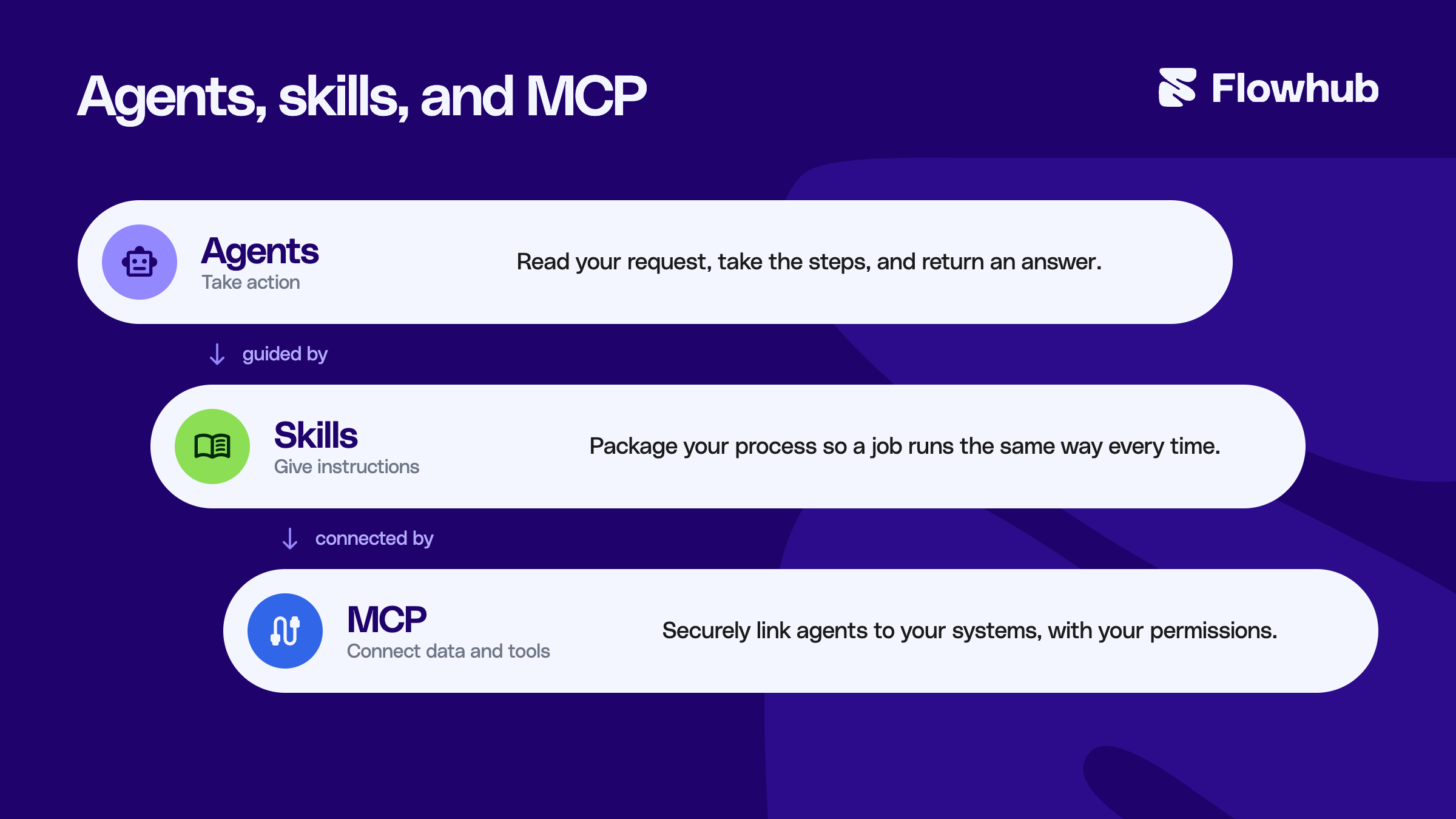
MCP gives access. Skills teach the job.
Flowhub MCP connects your AI assistant to your Flowhub data and tools. It lets you ask questions, get answers, and take approved actions using plain language.
A skill adds the instructions for a specific job.
Without a skill, you may need to explain which data to review, what calculations to run, what rules to follow, and how you want the answer organized. Then you may need to explain it all again next week.
A skill packages those instructions for you. Add it once, then ask your AI assistant to run it whenever you need that job done.
Deal Optimizer contains the instructions for reviewing your promotions. It tells your AI assistant what information to examine, how to compare deal and full-price performance, and how to turn the results into useful recommendations.
What Deal Optimizer tells you
Deal Optimizer is an MCP skill that analyzes your Flowhub data and helps answer three practical questions:
- What should I put on sale?
- What should I leave at full price?
- Which current deals should I keep, stop, or rethink?
Each recommendation explains the reason behind it. When a product may be worth discounting, Deal Optimizer also suggests a discount to test.
For example:
This product is selling slowly, has room for a discount, and is rarely on sale. Consider testing 15% off for one week.
The goal is not to predict the perfect price. It is to make a smart decision, measure what happens, and use the result to make the next decision better.
More sales can still mean less gross profit
The math matters because a promotion that sells more products does not always earn more money.
Gross profit is the money left from a sale after subtracting product cost. When you lower a price, the discount applies to every unit sold, not only the extra units the deal may have helped sell.
Quick read
Gross Margins vs. Markups: What's the Difference?
Consider this example:
At full price
2 units per day × $12 gross profit per unit = $24 gross profit per day
On deal
3 units per day × $7 gross profit per unit = $21 gross profit per day
The deal sold 50% more units, but earned 12.5% less gross profit per day.
Deal Optimizer catches that difference. It may recommend stopping the deal, lowering the discount, or trying another approach.
Sometimes price is not the problem. A product may need better placement, stronger marketing, a bundle with another product, or more customer education.
You make the final call
Deal Optimizer helps you decide. It does not make the decision for you.
If you choose a recommendation, the skill can prepare the deal and show you the product, discount, and timing. Nothing changes until you approve it.
Deal Optimizer works within your existing Flowhub permissions. When product cost is available, it will not recommend a price below the cost recorded in Flowhub. You should still check brand pricing policies and state requirements before approving a promotion.
How to use Deal Optimizer
Already using Flowhub MCP? Start with step two.
- Connect an AI assistant that supports MCP to Flowhub at https://mcp.flowhub.com.
- Download the Deal Optimizer skill file from Flowhub.
- Follow your AI assistant’s steps to add the skill. Most assistants let you upload or attach a file, or add it as a skill.
- Ask it to run Deal Optimizer.
That’s it. The skill stays available, so you can return next week and ask again.
Deal Optimizer reviews sales and inventory data available through your Flowhub connection.
It is not giving you generic retail advice. It looks at how products are performing in your store, including sales, margins, current discounts, and available inventory signals.
You don't learn a new tool. You just ask.
You can start with:
Run the Deal Optimizer skill.
If the skill needs a store, date range, or other information, it will ask.
You can also provide a more detailed request:
Using my Flowhub data, act as my deals analyst. Review the last 30 days of sales and inventory for my Downtown Denver store. Recommend products to test on sale next week, products to leave at full price, and current deals to keep, stop, or change. Show the gross-profit-per-day math behind each recommendation. Suggest a discount and test period where appropriate. Do not create any deals until I approve them.
Or keep it short and simply ask:
What should I put on sale?
All three approaches work. You're briefing it the way you'd brief a sharp new hire.
Make it a weekly habit
If your AI assistant supports scheduled tasks or routines, you can put Deal Optimizer on a schedule. Ask it to run Deal Optimizer automatically each week and deliver the recommendations for your review.
We recommend running the skill manually at least once before scheduling it. Review the first few weekly results and adjust the store, time period, or instructions if needed.
Scheduling the analysis does not remove the approval step. Deal Optimizer can prepare a recommendation every Monday, but you still decide whether to create or change a deal.
Deal Optimizer creates a simple loop:
Review last week’s deals > Keep what worked > Change what did not > Repeat
Over time, your deal strategy becomes less about habit and more about what works for your store.
The goal is not to put more products on sale. It is to discount with more purpose.
The most useful recommendation may be knowing what to leave alone. Try Flowhub's Deal Optimizer skill today!


